An integration is also a release.
A configuration change travels through provider tools, institutional workflows, and a public marketplace. The work was to make those dependencies visible—and sequence them.
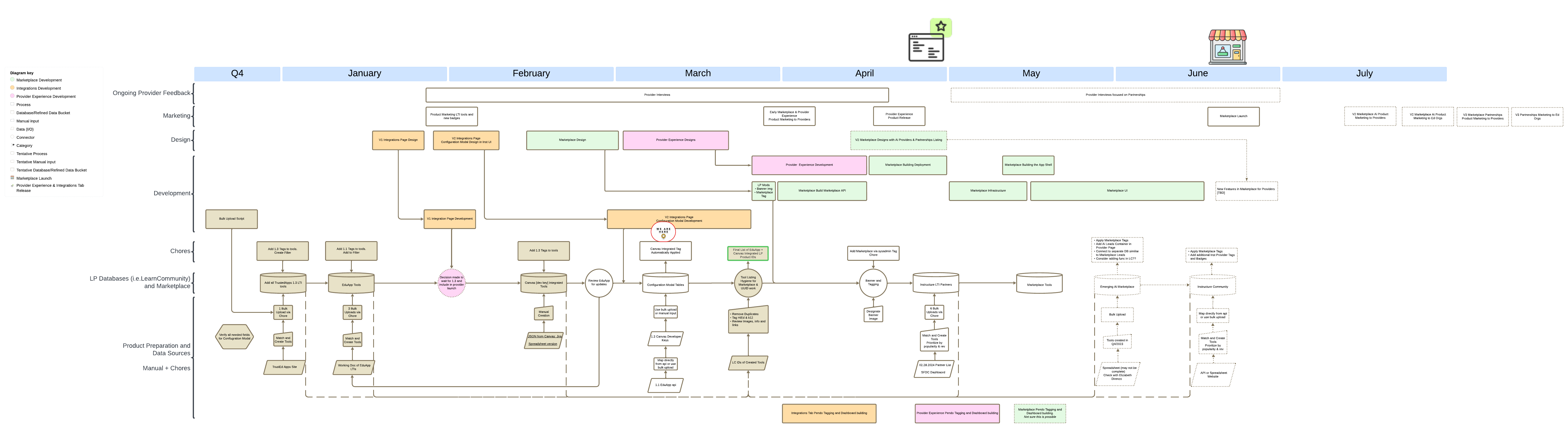 Open original planning sheetExplore the plan and three workflows
Wait for LTI 1.3.
Include it in the provider launch.
Documented planning decision, recorded in the original process map. The artifact shows the decision and its dependencies. It does not establish the final shipped date.
Make the integration usable.
Connecting systems was only part of the work. People also needed to discover integrations, manage product information, and configure their tools.
Discoverable.
Find a useful
starting point.
Show LTI support where educators evaluate a tool, with available versions and a path into configuration.
The entry point is part
of the product.
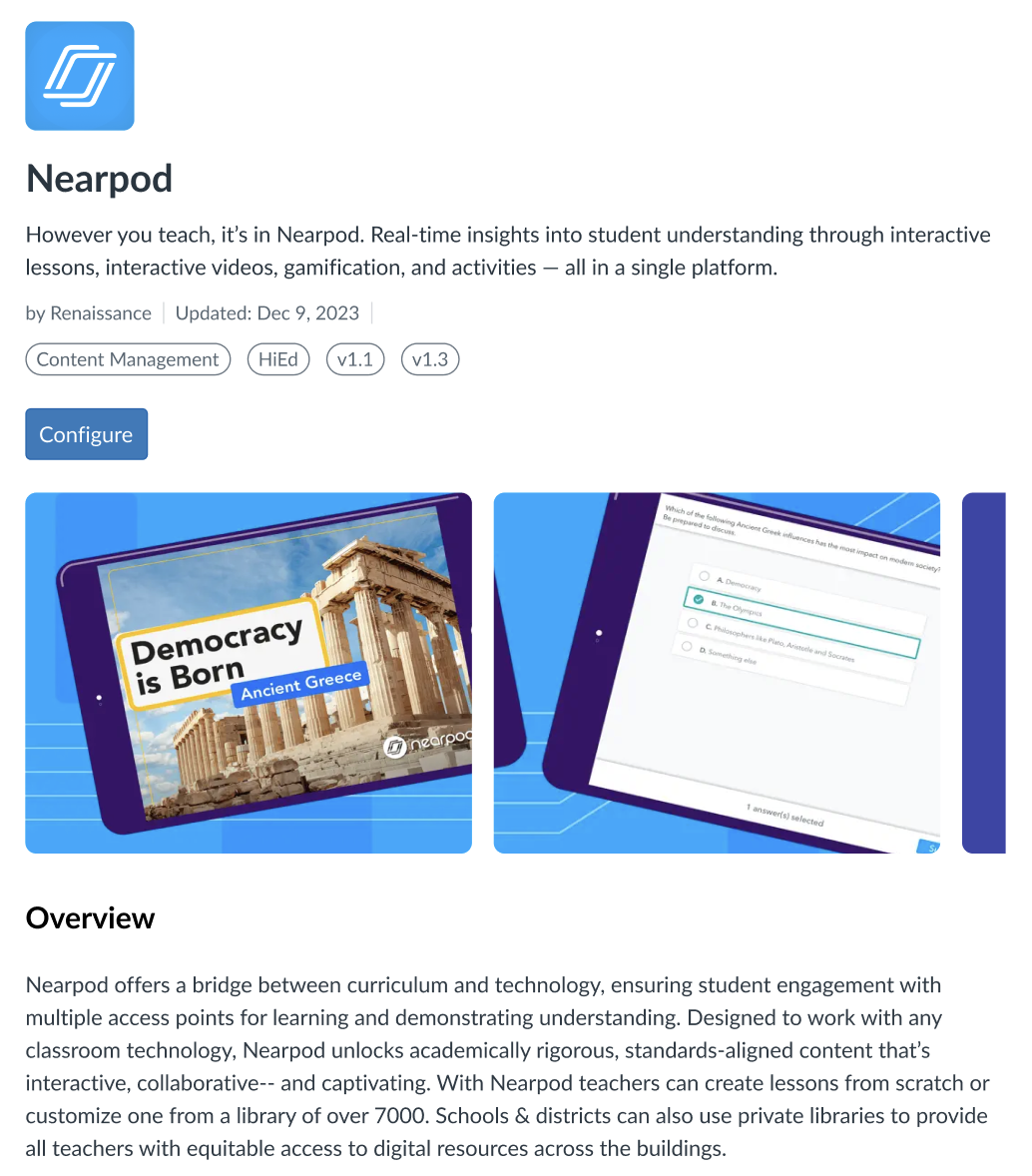 A078 / Product detailInspect sourceInspect placements, services, and setup guidance
Controllable.
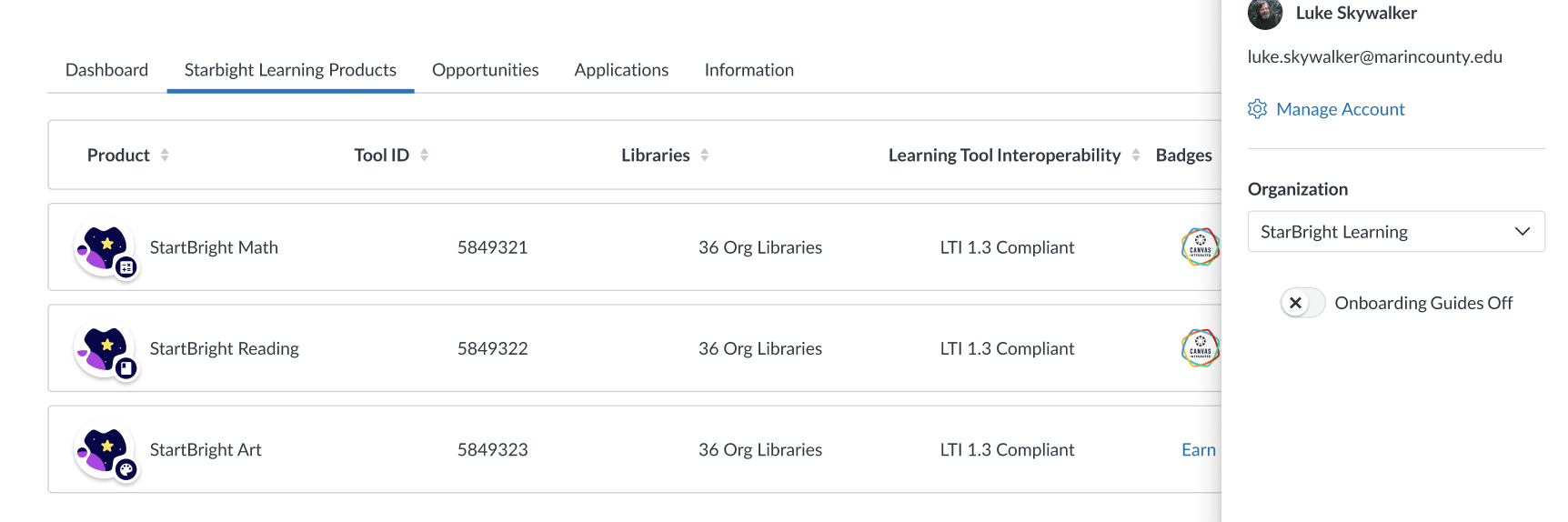 A081 / Provider product tableInspect sourceFollow the provider’s create, save, and publish workflow
Configurable.
Support the setup.
Plan URL, manual, and JSON configuration paths, including validation, permissions, placements, and review.
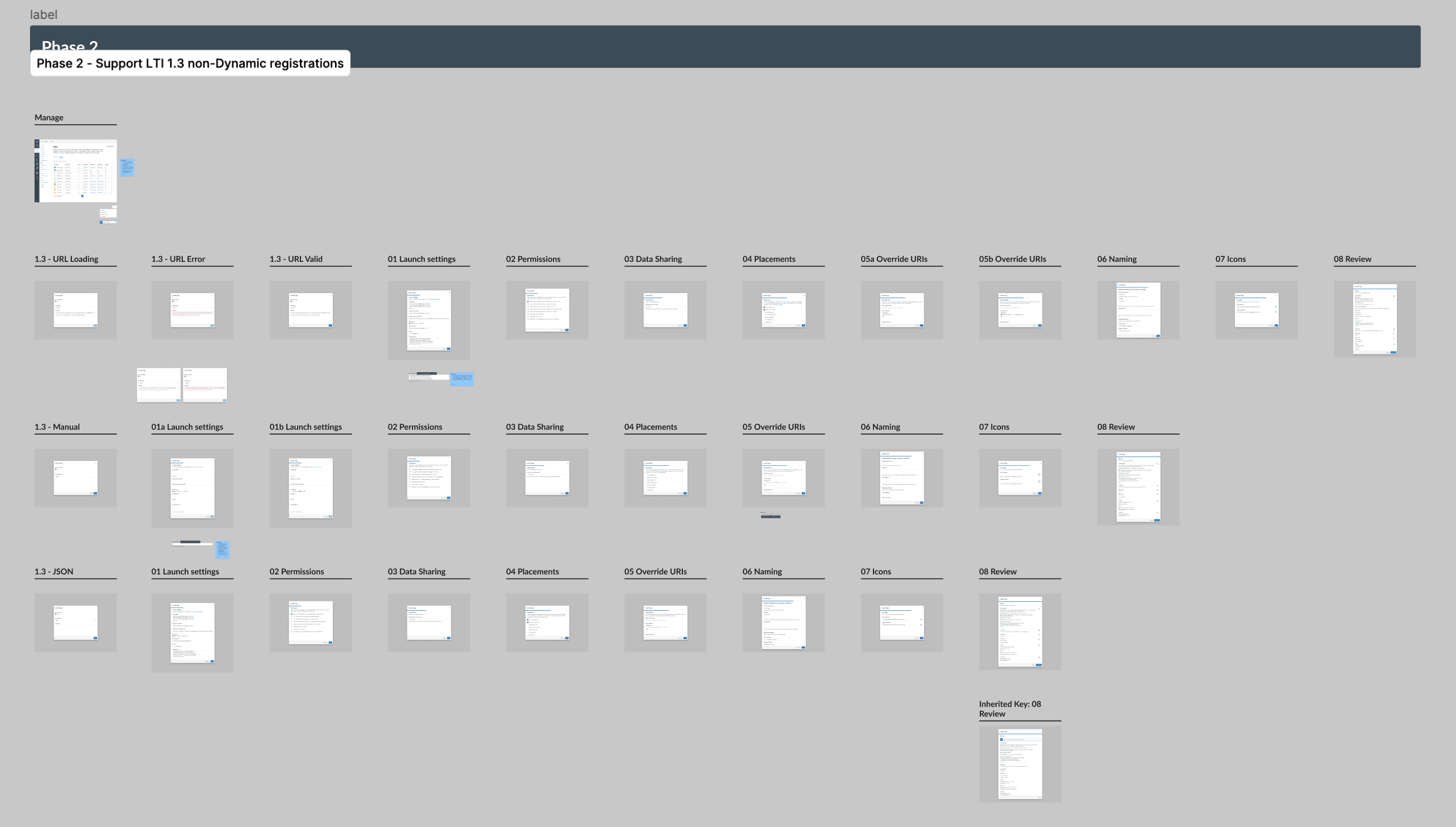 A080 / Configuration pathsInspect sourceExplore URL, manual, and JSON setup paths
Different methods.
One coordinated effort.
I used Agile with engineering, Kanban for contractor tagging and uploads, and critical-path planning to coordinate dependencies and launch targets.
More than 900 tools made onboarding, review, and data hygiene a substantial part of the work.
Reported project scope